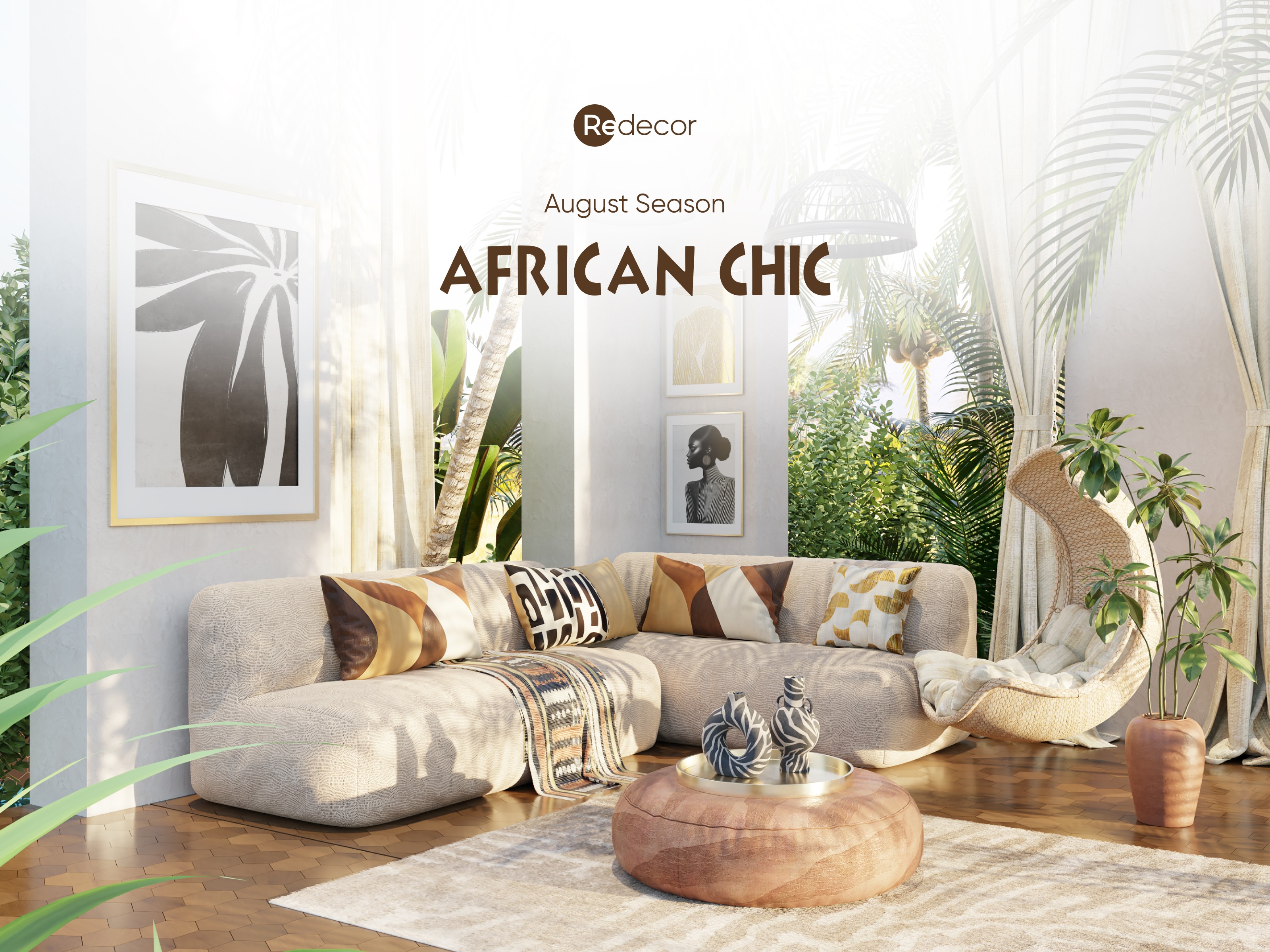
In recent years, the world has witnessed a growing appreciation for African design—an aesthetic that goes far beyond safari prints and earthy palettes. Within this broad and richly diverse design landscape, modern East African interior design has begun to carve out a distinct voice: one that is deeply rooted in heritage yet refreshingly contemporary. Often referred to as African chic, this design approach blends tradition, craftsmanship, and innovation in ways that reflect both local identity and global sophistication.
Why East Africa?
The African continent is so wide, we couldn’t begin to summarize its design aesthetic in one Season. That’s why the Redecor artists have chosen to focus on East Africa, for its distinct beauty and unique cultural and historical landscapes. Since East Africa encompasses 18 Sovereign states and 4 territories, we’ve got a LOT of inspiration to work with this season!
What is Modern East African design?
A blend of traditional African design and modern design aesthetics is a new design language that’s emerging and making itself heard worldwide. East African interior design draws inspiration from the natural beauty and cultural richness of the countries it encompasses. Incorporating it with a modern edge gives this style a whole new definition. It’s not about mimicry or catching up with global trends. It’s about reclaiming space with intention, blending the wisdom of tradition with the clarity of contemporary aesthetics.
The Redecor Art Team’s Top Tips to Master this Style
The right materials
One hallmark of East African modern interiors is the use of natural materials. Locally sourced wood, stone, sisal, and clay appear not just for their sustainability, but for their tactile beauty and cultural resonance. You’ll often find handcrafted furniture with clean, sculptural lines, often made by local artisans. These pieces aren’t just functional—they carry stories, relationships, and a sense of place.
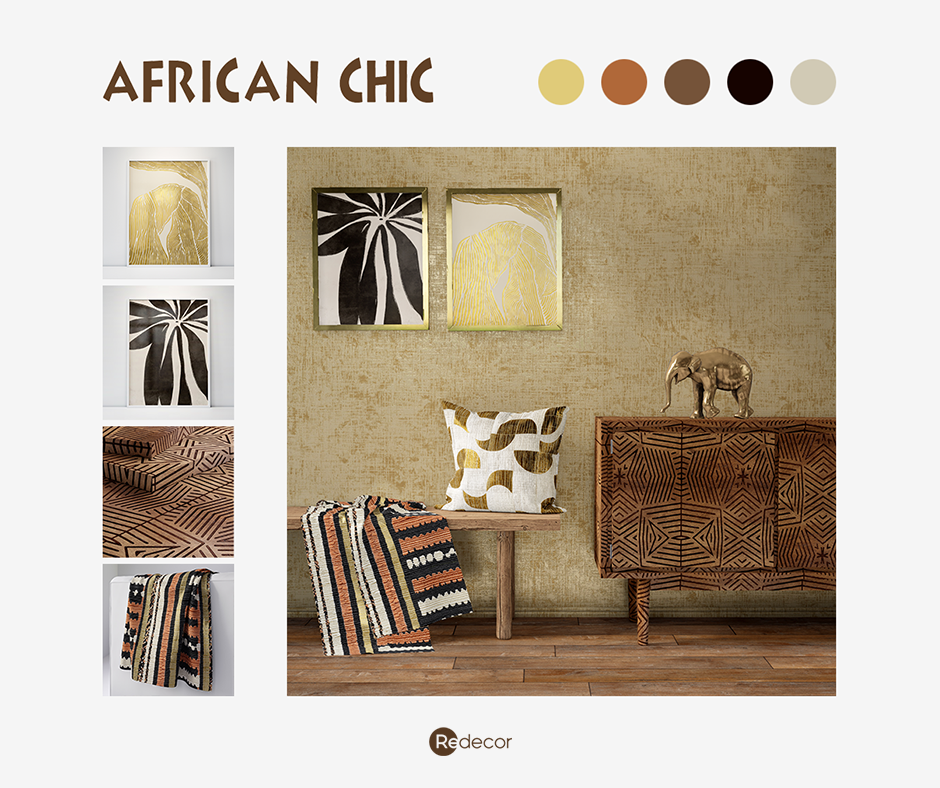
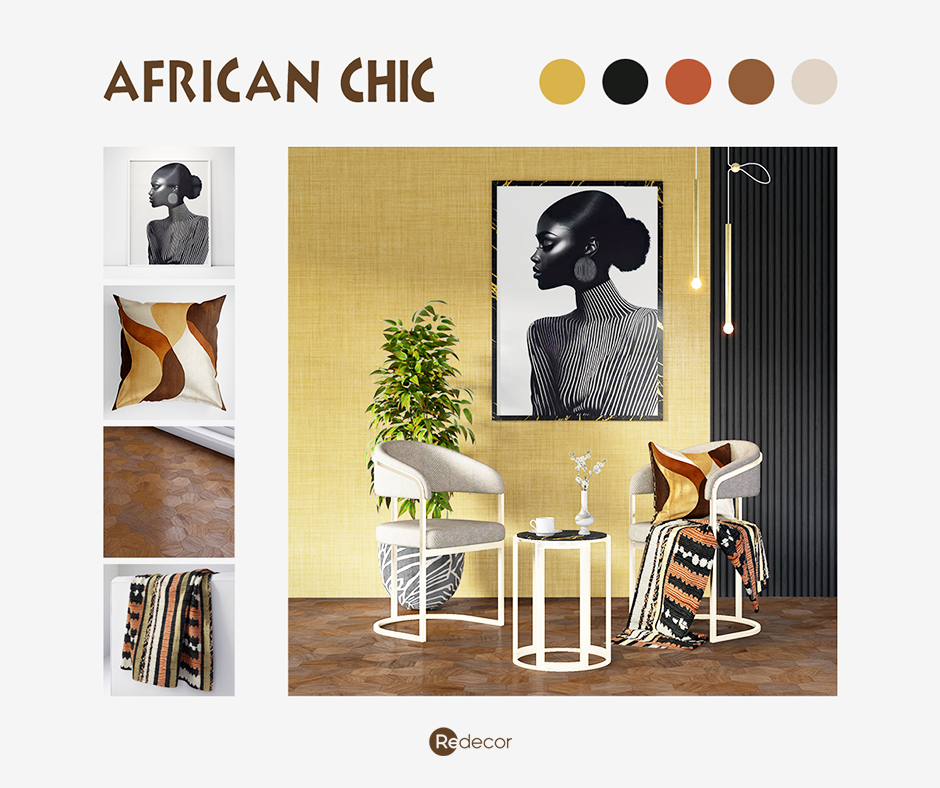
In the example below prepared by the Redecor Art Team, you can see how these geometrical patterns have found their way into the design world, in furniture, artwork and even throws. Notice how the artists purposefully chose three different shades of wood in one setting: the wooden bench, geometric wooden cabinet, and wooden floorboards all correspond with one another.
The right colors
Color palettes are typically warm and organic: deep ochres, rich browns, clay reds, muted greens, and neutral tones that echo the East African landscape. Walls may be washed in soft earth tones such as muted clay, warm sand, or a deep olive green that catches the light just right. Under a modern lens, these strong colors or patterns are met with soft neutrals and open space layouts, creating an atmosphere that is calm but not minimal to the point of sterility.
Here you can see the play of colors between the floor, the wall and the pillow. There isn’t a stark contrast between them, but more of a natural flow where you can understand the inspiration for all of these items came from the same place, even if they don’t mirror each other perfectly or aren’t varying shades of the same thing. These colors still belong together, creating a more harmonious look.
Not minimalism, not maximalism
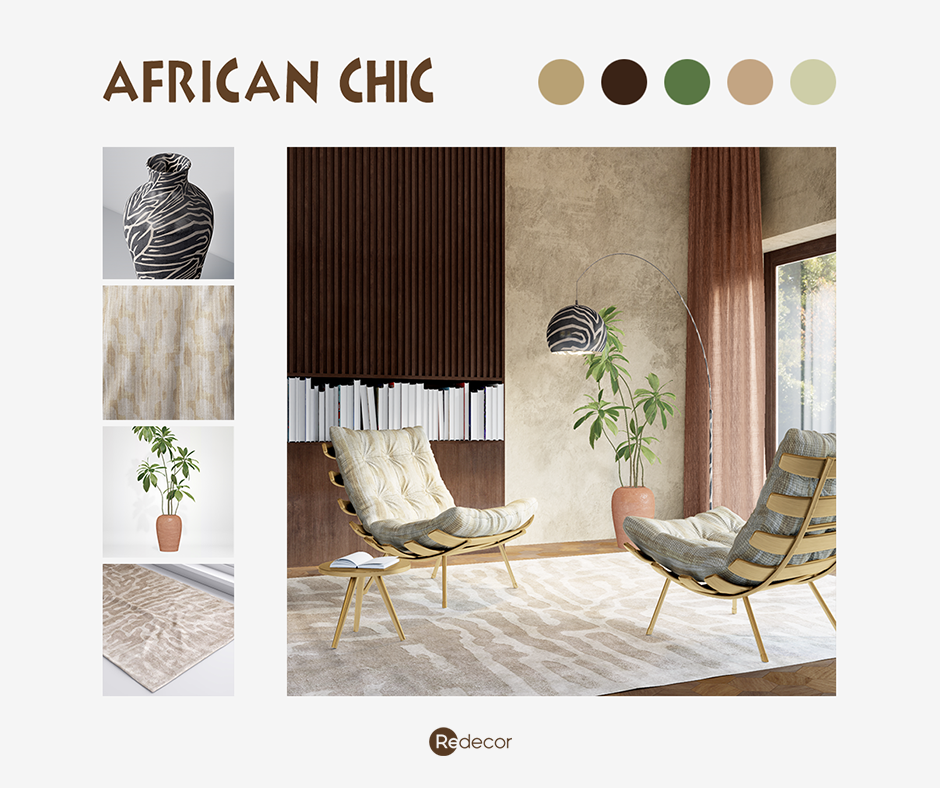
The use of patterns and colors is balanced out with the rest of the space in this design style. This means that while, yes, adding decor items and patterns is welcome with open arms, they’re arranged in ways that feel clean, intentional, and spacious. Nothing is crowded. Each piece has room to breathe.
The patterned light fixture, the patterned rug and the patterned upholstery all fit together nicely and don’t overwhelm each other. This is because the floorings, walls and curtains chosen are on the solid, muted side of the design world, making it easy to feel like the design is as spacious as can be, despite it actually having quite a few patterns and items coexisting within it at the same time.
Organic shapes
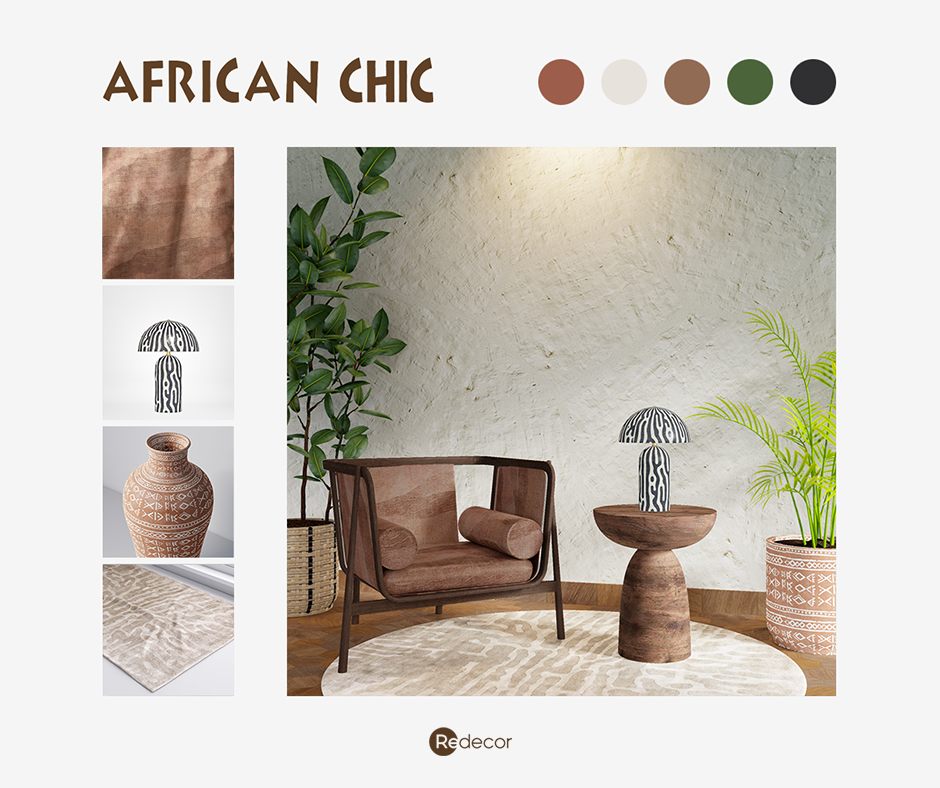
While modern design often leans toward clean lines and symmetry, African chic design celebrates natural imperfections . Unlike geometric shapes (which rely on strict lines, perfect circles, and sharp angles), organic forms are imperfect and fluid, more like the curve of a gourd, the outline of a hand-carved bowl, or the winding path of a river.
Inside Designs, these kinds of shapes add warmth, soul, and that all-important handmade feel.
Inperfections are celebrated in this design style. You can see that in the wall that isn’t perfectly smooth, the table that isn’t perfectly symetrical and even in the lamp’s pattern, one that flows rather than repeats itself. The fact that there’s more flow to design elements in the scene doesn’t make it any less cohesive though – which is beautiful and one of the main takeaways from this scene the art team has created for us.
Rethink walls & ceilings
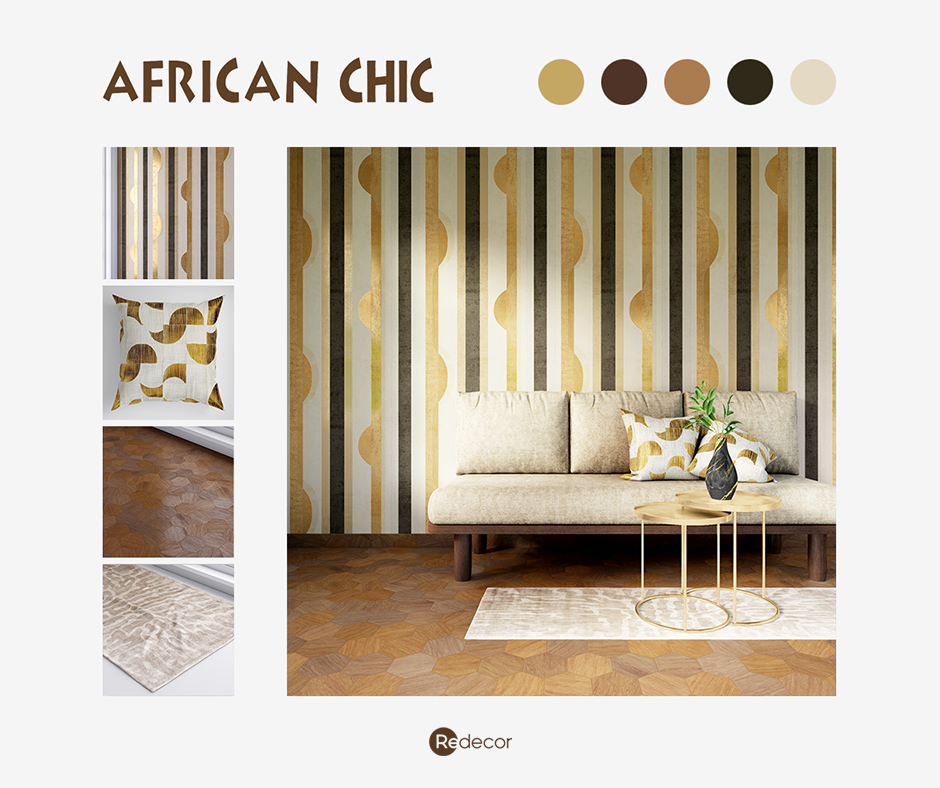
Don’t stop at floor and furniture: walls and ceilings offer huge design potential in African chic interiors. Try clay-based or limewash wall finishes for a textured, matte look. Or, for more immersive design, explore painted ceilings or exposed timber rafters inspired by Swahili or Berber styles. The beauty of this region is that there are so many different inspirations to play with – and this Season, you’re invited to do just that.
This example shows how fun and interesting wallpaper can be! It corresponds perfectly with the pillows and golden table, and yet doesn’t clash with the floors or the wood of the sofa. In the scene under the previous clause, we had a beautiful limewash wall, which comes to show just how versatile your walls and ceilings can be this season.
This design movement isn’t a trend. It’s not fast, and it’s not loud. It’s a quiet return to meaningful design—where the objects in your home reflect your values, your environment, and your history. It’s practical, yes, but also deeply beautiful. And perhaps that’s what makes it feel so fresh: in a world of copy-and-paste aesthetics, modern East African design feels honest.
Try your hand at this exciting design style this Season!